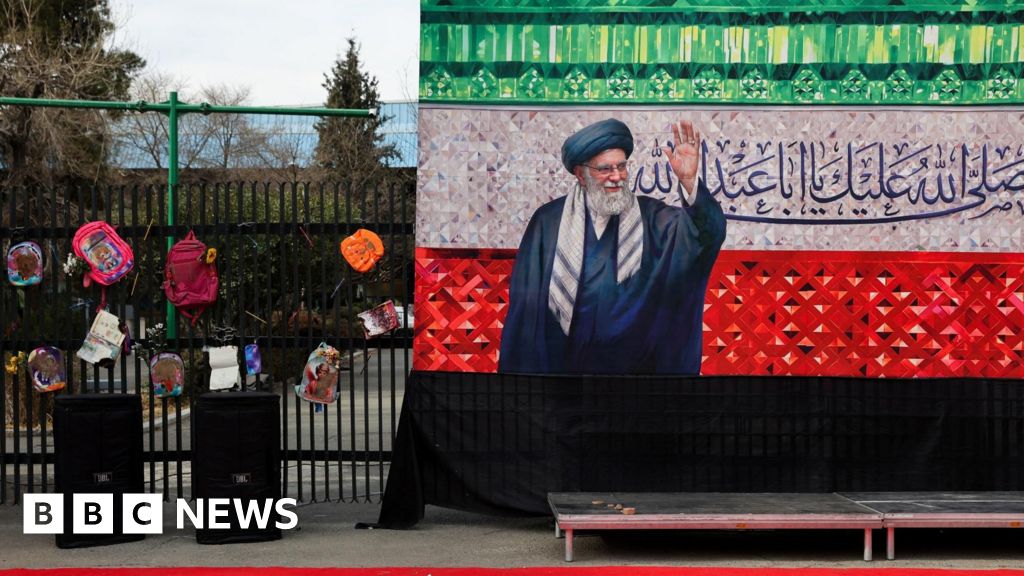
The Islamic Republic of Iran is navigating an unprecedented period of uncertainty and tension following the death of its Supreme Leader, Ayatollah Ali Khamenei. His passing, reportedly at 86, occurred amid a flurry of US-Israeli strikes that have targeted key infrastructure within Tehran, casting a grim shadow over the nation. Adding to the gravity of the situation, plans for Khamenei's state funeral have been dramatically postponed, officially due to the anticipation of an overwhelming turnout, but implicitly intertwined with the escalating security concerns and the urgent, complex search for a successor.
Funeral Postponement: A Confluence of Logistical Challenges and Security Concerns
Initially slated for Wednesday evening in Tehran, with subsequent burial in the holy city of Mashhad, the solemn farewell for Ayatollah Ali Khamenei was abruptly delayed. Iranian state television cited "unprecedented turnout" as the primary reason, suggesting that "millions of people" were expected to participate, necessitating additional time to "provide the proper infrastructure." Mohsen Mahmoudi, head of Tehran's Islamic Development Coordination Council and the event's organizer, reiterated this, highlighting the logistical hurdles posed by such a colossal gathering.
While the official narrative focuses on the logistical challenge, the timing of the postponement raises significant questions. Khamenei’s death, reported on Saturday, occurred amidst a backdrop of relentless US-Israeli strikes pounding Tehran's military and governmental infrastructure. This volatile security environment undeniably complicates any mass gathering. Iranian authorities, while not directly linking the delay to the security situation, are acutely aware of the potential threat. A state funeral, designed to project national unity and strength, could paradoxically become a vulnerable target in a region already on edge. The memory of Ayatollah Ruhollah Khomeini's funeral in 1989, which drew an estimated 10 million mourners, serves as both an inspiration for demonstrating popular support and a stark reminder of the immense logistical and security complexities involved. For more on the official reasons behind the delay, you can read about Iran's decision to postpone Khamenei's funeral due to expected millions and logistical hurdles.
The Shadow of US-Israeli Strikes on Iran's Capital
The death of Iran's Supreme Leader could not have come at a more fraught moment. Reports indicate that US-Israeli strikes have been ongoing in Tehran since Saturday, specifically targeting critical military and government sites. This relentless pressure campaign introduces a new layer of instability and urgency to the succession process and the handling of the supreme leader's demise. The strikes underscore the existential threats perceived by Iran from its adversaries, and conversely, the threats Iran is perceived to pose to regional stability.
This "war situation," as described by senior cleric Ayatollah Ahmad Khatami, member of the Guardian Council and Assembly of Experts, profoundly impacts internal decision-making. The regime's priority shifts from mere succession to ensuring the continuity and security of the state in the face of external aggression. The decision to delay the public farewell might therefore be a calculated move to mitigate risks, allowing authorities to better secure key sites and plan for contingencies, rather than creating a massive, exposed gathering during an active period of strikes.
The Critical Search for a Successor Amidst Turmoil
Ayatollah Ali Khamenei, who served as Supreme Leader since 1989 following the passing of Ayatollah Ruhollah Khomeini, held ultimate authority over all branches of government, the military, the judiciary, and served as the country's spiritual guide. His death leaves a monumental void at the apex of Iran's complex political and religious structure. The responsibility of identifying his successor falls to the 88-member Assembly of Experts, a body elected by the public every eight years.
The Succession Process: A Delicate Balance of Power and Piety
The constitutional requirements for the Supreme Leader are stringent: the candidate must be a senior jurist with profound knowledge of Shia Islam jurisprudence, possess political judgment, courage, and administrative capability. Candidates for the Assembly of Experts themselves must first be vetted and approved by the Guardian Council, a powerful oversight body whose members are partly appointed by the Supreme Leader, creating a cyclical influence. A simple majority within the Assembly is sufficient to appoint the new leader.
Ayatollah Ahmad Khatami's statement that the country is "close to a conclusion" but that "the situation in the country is a war situation" highlights the immense pressure on the Assembly of Experts. This is not merely a procedural matter; it is a critical decision that will shape Iran's trajectory for decades, especially in the current geopolitical climate. Potential candidates, such as Khamenei’s second son, Mojtaba Khamenei, are often discussed in hushed tones within political circles, but the opacity of the process makes predictions difficult.
The selection of a new Supreme Leader during a period of overt hostility from the US and Israel introduces several layers of complexity:
- Internal Consensus: The Assembly must quickly converge on a candidate who can command widespread respect among the clerical establishment and military, preventing any internal fragmentation.
- External Legitimacy: The new leader must project an image of strength and stability to both the Iranian populace and the international community, particularly amidst ongoing threats.
- Security Imperatives: The chosen successor will immediately face the immense challenge of guiding the nation through heightened regional tensions and potential continued strikes.
The delay in the funeral procession for Khamenei, while officially logistical, also buys the Assembly of Experts precious time to solidify their decision and present a united front. Understanding the deeper reasons behind the delay beyond just crowds and logistics offers crucial insights into Iran's strategic thinking during this critical transition. You can explore why Iran delayed Khamenei's farewell beyond just crowds and logistics for a more in-depth analysis.
Geopolitical Repercussions and Iran's Future Trajectory
The passing of Ayatollah Ali Khamenei and the ensuing search for a successor, compounded by active US-Israeli strikes, marks a pivotal moment for Iran and the wider Middle East. The Supreme Leader's death leaves a power vacuum at a time when regional conflicts, particularly the Israel-Hamas war and its spillover effects, are at an all-time high.
The new Supreme Leader will inherit a nation grappling with severe economic challenges, widespread domestic discontent, and an increasingly assertive posture from external adversaries. Their immediate tasks will include:
- Maintaining Stability: Ensuring national unity and preventing internal dissent from escalating, especially during the emotional period of mourning for the late leader.
- Navigating Foreign Policy: Defining Iran's future approach to regional proxies, nuclear ambitions, and relations with global powers amidst intensified external pressures.
- Reasserting Authority: Quickly establishing their personal authority and command over the diverse factions within the IRGC, the military, and the clerical establishment.
The choice of successor could significantly impact Iran's stance on key issues, from its nuclear program to its regional alliances. A hardline successor might escalate tensions, while a more pragmatic choice could open avenues for de-escalation, though such a shift is difficult to imagine in the current climate. The world watches closely as Iran prepares to bid farewell to its long-serving leader and charts a new course under unprecedented pressure.
Conclusion
The postponement of Ayatollah Ali Khamenei's funeral is far more than a logistical detail; it is a telling indicator of the immense pressures currently gripping Iran. Caught between the somber duty of mourning a long-serving leader and the immediate threat of foreign strikes, Iranian authorities face a delicate balancing act. As the nation prepares for the eventual farewell and grapples with the critical task of choosing a new Supreme Leader, the intertwining factors of internal succession politics, external aggression, and the profound symbolic weight of a iran khamenei funeral during a "war situation" will undoubtedly shape the future of the Islamic Republic and its place in the world.